
Fight For America: Country War
HomaAction
4.212.48K Reviews
- Version
- 3.45.3
- Installs
- 10.00M
- Age Rating
- Teen
Screenshots

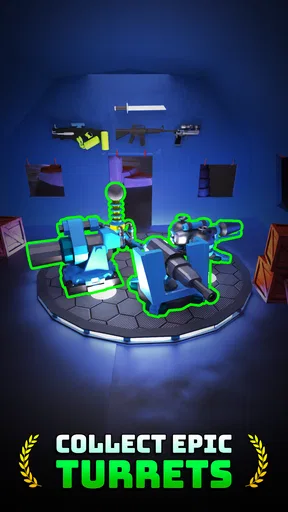
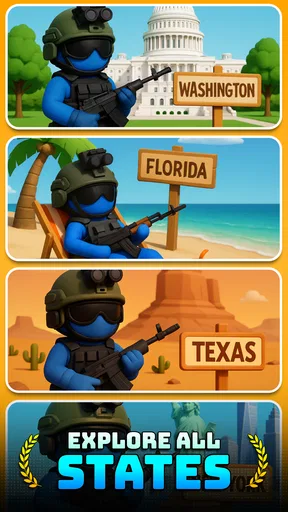
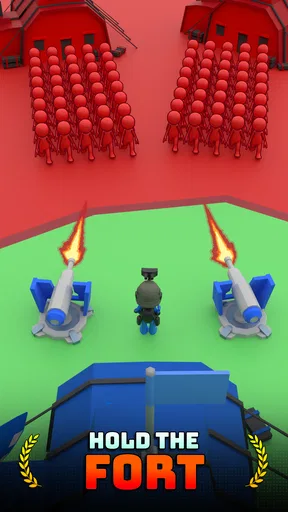
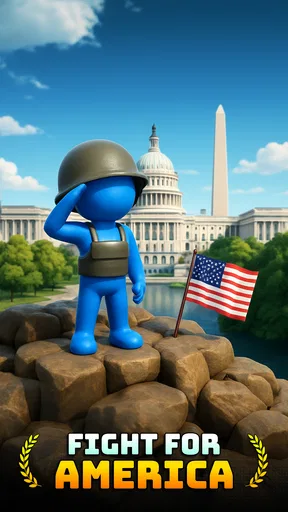
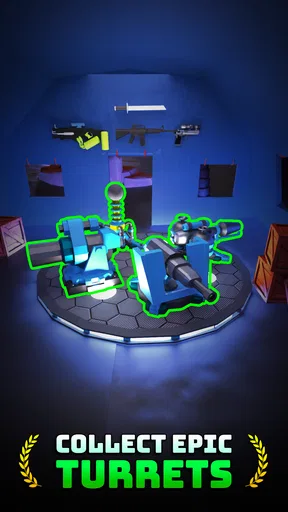
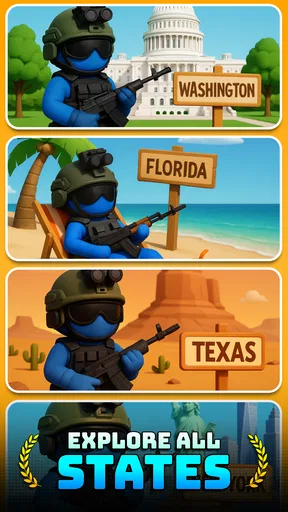
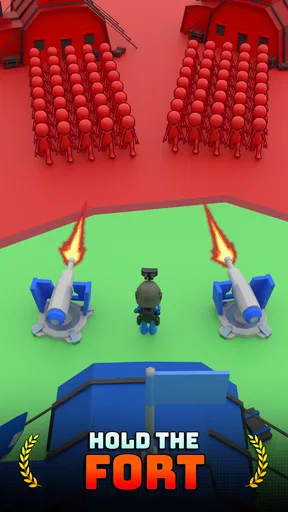
Our Review of Fight For America: Country War
 Analysis by Appyee
Fight For America: Country War is the kind of action game I can open for a quick burst when I want direct objectives rather than a long tutorial or a complicated story. The idea is immediately clear: I command an army, push against an enemy force, and work toward reclaiming territory. That straightforward setup gives each session an obvious purpose, which is useful when I only have a few spare minutes.
Developed by Homa, this free game has attracted a large audience, with more than ten million installs and an average score of 4.2 from roughly 439 thousand ratings. Those figures suggest that its simple battlefield premise has broad appeal, but they do not remove the need to look at how the game actually feels over time. For me, the important questions are whether the early goals stay interesting, whether progress feels visible, and whether the challenge develops instead of simply becoming slower.
Clear early goals make the first sessions easy to understand
The opening appeal comes from the clarity of the objective. I am not asked to learn a dense set of menus before playing. The central loop is built around leading forces into conflict and taking back ground, so I can understand what I am trying to accomplish almost immediately. That makes it approachable for players who prefer action games that explain themselves through play.
This directness also makes the game suitable for short everyday sessions. If I have a few minutes while waiting for an appointment, I can start with a concrete intention: advance, overcome the opposition, and see whether I can move the campaign forward. It does not require the same mental preparation as a large strategy game where I might spend more time arranging resources, studying a map, or planning several turns ahead.
The trade-off is that a simple goal has to remain satisfying through execution. Reclaiming the nation is a strong starting idea, but the enjoyment depends on how much thought each encounter demands. Players looking for a deep military simulation should keep their expectations in check. This is an accessible action experience, not a replacement for a detailed strategy title with extensive diplomacy, logistics, or long-term army management.
I also like that the premise gives the game a natural sense of direction. Even when the individual action is uncomplicated, the larger goal helps the campaign feel more purposeful than a collection of disconnected fights. The best way to approach it is to treat each stage as a short step in a wider push rather than expecting every encounter to deliver a dramatic new twist.
What progress feels like during normal play
Progress is most satisfying when I can connect a completed battle to a visible change in my wider situation. In a game built around reclaiming a country, forward movement matters because it turns isolated victories into a campaign. I pay attention not only to whether I won, but also to whether the result makes the next objective feel closer and more meaningful.
That is an important distinction for casual players. A game can be easy to start but still lose momentum if victories do not seem to matter. Here, the national conflict provides a useful context for continued play. I have a reason to return beyond simply repeating the same action: I am trying to keep moving through the larger fight.
At the same time, I would not describe the progression as the main reason to choose this game over every alternative. Its appeal is tied to the combination of quick action and a clear campaign direction. If you want a highly elaborate system of character builds, carefully layered equipment choices, or a long list of strategic decisions between battles, you may find the progression too light. The game works better for someone who values momentum and accessibility.
One practical tip is to play with a small goal for each session instead of expecting a major breakthrough every time. I might decide to complete one objective, test how I handle a tougher encounter, or simply make one more step in the campaign. This approach makes the pacing feel more consistent and prevents a short session from seeming disappointing just because it did not produce a dramatic unlock.
Challenge should be judged by how it changes your decisions
The challenge curve is where my opinion becomes more cautious. Early action games often feel rewarding because the controls and objectives are easy to grasp. That initial comfort is valuable, but it can also create a problem if later stages add difficulty without adding meaningful decisions. I look for moments where I need to adjust my approach, not merely repeat the same action for longer.
For me, the strongest form of difficulty is one that makes me reconsider timing, positioning, or the way I commit my army. A tougher opponent should encourage a different response rather than just demand more attempts. When the game creates that kind of pressure, a defeat can be useful because it tells me that my current approach needs changing.
The less satisfying version is friction that feels like a gate. If progress begins to depend more on repeating earlier content than on improving my play, the campaign can lose its urgency. This is especially noticeable for players who enjoy action games because they want to feel their own skill developing. A difficulty increase should test judgment, not only patience.
I recommend resisting the urge to rush through every encounter. Taking a moment to read what is happening on the battlefield can make a difference, particularly when an apparently easy advance turns into a costly mistake. The game’s simple premise can tempt me to play on autopilot, but paying attention is more rewarding than treating every stage as an identical tap-through.
That advice also helps reveal whether the difficulty suits you. If you enjoy learning a straightforward combat loop and improving through repetition, the rising pressure can provide a pleasant rhythm. If you want constant surprises and a wide range of tactical options, the limited simplicity may become noticeable sooner.
Unlocks and the feeling of earning the next step
Unlocks matter because they give a reason to continue after the novelty of the opening battles fades. I judge them by whether they change how I approach the next encounter or simply provide a temporary sense of completion. In this game, the most useful progression is the kind that supports the central army-versus-army fantasy and helps me feel better prepared for the next stage.
There is a subtle difference between visible progress and meaningful progress. Seeing that I have moved forward is encouraging, but I also want the next step to feel earned. A good session should leave me with a clear understanding of what I accomplished and what I can work toward next. That clarity is particularly important in a free action game, where the temptation can be to keep playing without a strong personal objective.
I find it helpful to treat unlocks as tools rather than trophies. Instead of focusing only on collecting the next reward, I think about whether it changes my route through an encounter or makes a previously uncomfortable situation easier to manage. This mindset makes the progression more engaging and reduces the disappointment that can come from expecting every unlock to transform the entire game.
There is also a reasonable trade-off here. A streamlined progression system keeps the game accessible, but it may not satisfy players who want to spend a long time fine-tuning a specialized army. If your favorite part of strategy games is comparing many combinations and building an elaborate setup, this is probably not the right destination. If you prefer a clear reward path that supports fast action, its restraint is easier to appreciate.
Where the pacing holds up and where it can lose pressure
The pacing works best when the game keeps three things aligned: a clear immediate objective, enough resistance to make success feel earned, and a visible reason to attempt the next stage. When those elements meet, I can play several short sessions without feeling that I am wandering. The action stays connected to the campaign rather than becoming empty repetition.
Retention pressure becomes more noticeable once the initial curiosity has passed. The store summary promises command, combat, and national recovery, but a promise alone cannot sustain a long-term player. I continue when the next encounter feels like a meaningful test or when I want to see how far the campaign can go. I stop when the loop begins to feel like the same task with little new decision-making.
This is why I would not recommend judging the game only by the first few minutes. The opening is effective at showing the basic appeal, but the real question is whether your enjoyment comes from the repeated action itself. Some players are happy with a familiar loop that can be played casually. Others need frequent changes in objectives or mechanics, and they may feel the pacing flatten earlier.
In daily use, I think it fits best as a game I return to between other activities rather than as my only action title. I can play it during a short break, stop without losing an entire evening, and come back when I want another focused push. That role suits its accessible structure. It is less convincing for someone searching for an enormous campaign that demands sustained attention every night.
The free entry point helps with that low-commitment style. I can try the core experience without paying first, which makes it easier to decide whether the action and progression suit me. However, optional purchases range from $0.99 to $79.99 per item, so I would approach the store carefully. My advice is to decide in advance whether you are comfortable spending and to avoid treating a purchase as a solution to impatience with the campaign’s pacing.
Who will enjoy it, and who should choose something else
I would recommend this game to someone who wants an approachable action game with a military theme and an objective that can be understood immediately. It is a good fit for players who enjoy short sessions, visible forward movement, and a campaign framed around pushing back an enemy. The Teen content rating also makes it more appropriate for older players than for young children, so families should consider that before installing it.
It is particularly suitable if you like the feeling of directing a force but do not want the complexity of a traditional grand strategy game. You can focus on the immediate battle and the next piece of progress rather than managing a huge web of systems. That makes it easier to pick up after a break, which is a real advantage on a phone.
I would skip it if your priority is a deep competitive environment, a highly detailed simulation, or a story-heavy war game. It is also not ideal if repeated action without major structural changes quickly frustrates you. In those cases, a more complex strategy game may offer better long-term satisfaction, while a competitive action game may provide more demanding moment-to-moment play.
Compared with the usual alternatives in mobile action, its identity comes from combining a simple army-command fantasy with a campaign goal rather than relying solely on isolated arena matches. Compared with strategy alternatives, it is easier to enter but gives up some of the planning depth that makes those games absorbing. That middle position is both its strength and its limitation.
Practical details before installing
The game is free to download, with optional in-app purchases. It was released on July 31, 2022, and the current version is 3.45.3. On Android, it requires version 8.0 or later. Those details make it accessible to many existing devices, although I would still check available storage and device performance before committing to a longer campaign.
Because the game is designed around quick action, I would start by playing without spending anything. Give yourself enough sessions to decide whether the basic loop remains enjoyable after the first impression. If you are still interested once the early goals become familiar, then you can consider whether any optional purchase is worth it to you. The important point is that the game should be fun before spending, not only after it.
I would also suggest playing when you can give the screen your full attention, even if the session is short. The direct control style may look casual, but careless decisions can make an encounter feel harder than it needs to be. A quiet break is better than trying to play while handling several other tasks, especially once the opposition begins demanding more deliberate choices.
My verdict on the progression and staying power
After looking at the full progression arc, I see Fight For America: Country War as a focused, accessible action game rather than a deep strategy substitute. Its early goals are clear, its national-recovery theme gives victories context, and its short-session format makes it easy to fit into everyday life. I enjoy the fact that I can understand what I am doing quickly and still have a reason to attempt the next stage.
The main question is whether the repeated army battles continue to offer enough decision-making for you personally. If you enjoy gradual advancement and a familiar action loop, the campaign can provide satisfying momentum. If you need constant mechanical variety, extensive customization, or a highly demanding strategic layer, the same simplicity may feel restrictive.
My final recommendation is to try it as a free, low-commitment action game and judge it by the quality of its middle sessions, not just its opening. Keep your goals modest, pay attention to how difficulty changes your choices, and treat unlocks as practical progress rather than reasons to spend. With that approach, Fight For America: Country War offers a straightforward way to enjoy battlefield action in short bursts.
For me, the progression verdict is positive but specific: it sustains play when I am engaged by the campaign’s forward motion, yet it is unlikely to replace a full strategy game or a richer action experience. If that balance matches what you want from mobile gaming, Fight For America: Country War is worth trying. If not, its accessible design will probably feel too narrow rather than pleasantly focused.
Verdict
Strengths of Fight For America: Country War
- Simple controls make the game easy to pick up and play.
- Short missions suit quick gaming sessions on mobile devices.
- Multiple weapons add variety to combat encounters.
- Offline play is useful when you have no internet connection.
- Bright visuals and clear effects make enemies easy to spot.
Limitations of Fight For America: Country War
- Repetitive objectives can make longer play sessions feel monotonous.
- Difficulty may feel uneven as enemy encounters become more demanding.
- Frequent ads can interrupt gameplay, especially between missions.
- Weapon upgrades may require significant grinding or in-app purchases.
- Limited strategic depth may disappoint players seeking complex combat.
Other Releases by Homa
View All
Attack Hole - Black Hole Games
Arcade4.2

Agent Hunt – Hitman Shooter
Action4.5

Merge Master: Dinosaur Monster
Arcade4.2

Farm Land - Farming life game
Adventure4.5
Similar Picks in This Category
View All
Temple Run 2: Endless Escape
Imangi Studios4.1

PUBG MOBILE
Level Infinite4.3

Free Fire: 9th Anniversary
GARENA INTERNATIONAL I4.4

Talking Tom: Hero Dash Run
Outfit7 Limited4.3

slither.io
Lowtech Studios3.9

Sniper 3D:Gun Shooting Games
Wildlife Studios4.6
Frequently Asked Questions
What is Fight For America: Country War about?
Fight For America: Country War is an action and strategy game focused on defending territory during a national conflict. You take control of military forces, fight invading enemies, upgrade your equipment, and attempt to reclaim or protect important locations. The game combines shooting, base defense, and progression mechanics, making it suitable for players who enjoy short combat missions with a clear objective and increasingly difficult challenges.
Is Fight For America: Country War free to download and play?
The game can generally be downloaded and played without an upfront purchase, but it may include optional in-app purchases. These purchases can provide upgrades, currency, weapons, or other advantages that help speed up progression. Players who prefer not to spend money can still enjoy the core experience, although advancing through later stages may require more patience. Check the store listing for the current pricing and purchase details.
Does Fight For America: Country War require an internet connection?
Some parts of Fight For America: Country War may work without a constant internet connection, particularly basic missions or previously loaded gameplay content. However, an internet connection may be required for advertisements, in-app purchases, updates, cloud features, or other online services. Availability can also vary depending on the device and game version, so it is best to launch the game once while connected before attempting to play offline.
Is Fight For America: Country War suitable for children?
The game includes military combat, shooting, explosions, enemy attacks, and war-related themes, so it may not be appropriate for very young children. Its suitability depends on the age rating shown in the Google Play Store or Apple App Store and on each family’s preferences regarding simulated violence. Parents should also review advertising, in-app purchases, and device permissions before allowing children to play.
What devices are compatible with Fight For America: Country War?
Compatibility depends on the operating system, hardware, and version of the game available in your region. Before downloading, check the official store page to confirm the required Android or iOS version and available storage space. The game should run best on relatively recent devices with sufficient memory, while older phones or tablets may experience slower performance, longer loading times, or graphical limitations.
Play our best games!


